
The Craft · Difficulty
What makes a word search truly difficult?
For the seasoned solver, a genuine mental challenge is surprisingly rare. Most collections are built on sparse layouts and simple vocabulary — the answers practically jump off the page. At Thread Puzzles, we treat puzzle design as an architectural craft.
We don't believe in passive solving. Our expert-level collections are engineered specifically for solvers who want to genuinely test their pattern recognition, spatial awareness, and cognitive endurance. To achieve this, we use two entirely distinct philosophies of difficulty.
Two philosophies of engineered difficulty
An elite puzzle is defined not by its theme but by its mathematical layout and psychological engineering. We build our hard volumes two different ways.
Philosophy 01
The Lexical Endurance Run
An expansive academic marathon that tests visual scanning limits and vocabulary capacity.
- The 32×40 giant canvas. 1,280 letter blocks — no easy edge boundaries to anchor your sightlines.
- 100 words per puzzle. Sustained focus over a long solve. These aren't five-minute exercises.
- Linguistic exploration. Uncommon, rare vocabulary defeats automatic recognition — you search letter by letter.
Philosophy 02
The Tactical Camouflage Matrix
Familiar vocabulary, but a grid built as pure visual and psychological warfare.
- High-density 23×19 matrix. 40–60 words, with white space virtually eliminated.
- Frequency-matched fill. Filler letters mirror the word list's exact letter frequencies, so the noise camouflages the targets.
- Morphological traps. Repeated suffixes (-ism, -ion) spawn dozens of phantom starts and false positives.
- Masked obstacles & dead zones. Solid blocks and suppressed perimeters force your eyes into the heart of the grid.
See inside the blueprint
Let's see some examples! These quick reference cards illustrate some of the common techniques we use to adjust the difficulty of our puzzles.
1. Break the reading pattern
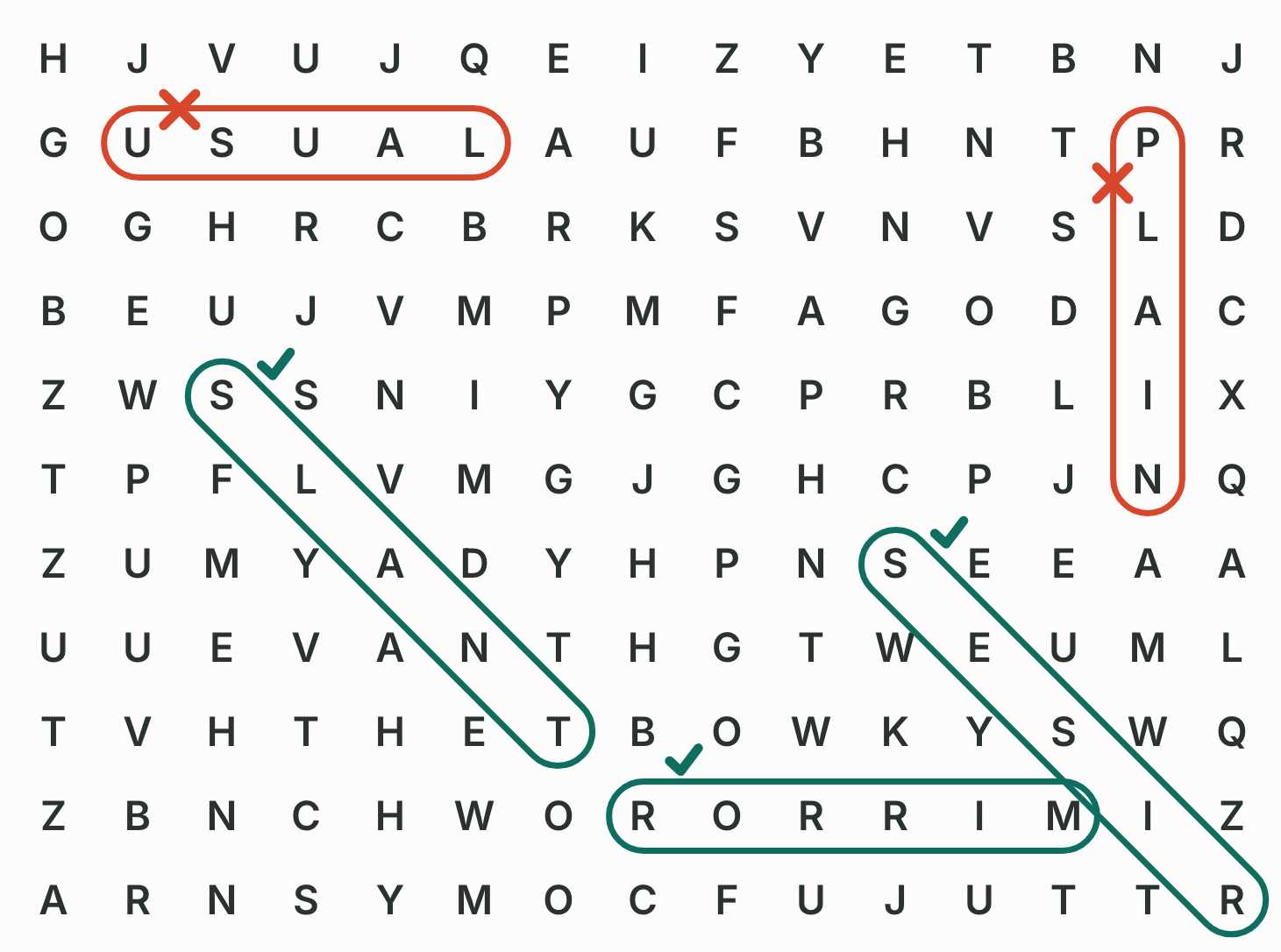
The eye reads one way: left-to-right, then top-to-bottom. Any answer placed along that path is found on reflex. Reverse it, tilt it diagonally, or run it bottom-to-top and the same word has to be hunted letter by letter. Favor the directions the eye doesn't expect.
2. Keep words off the edges
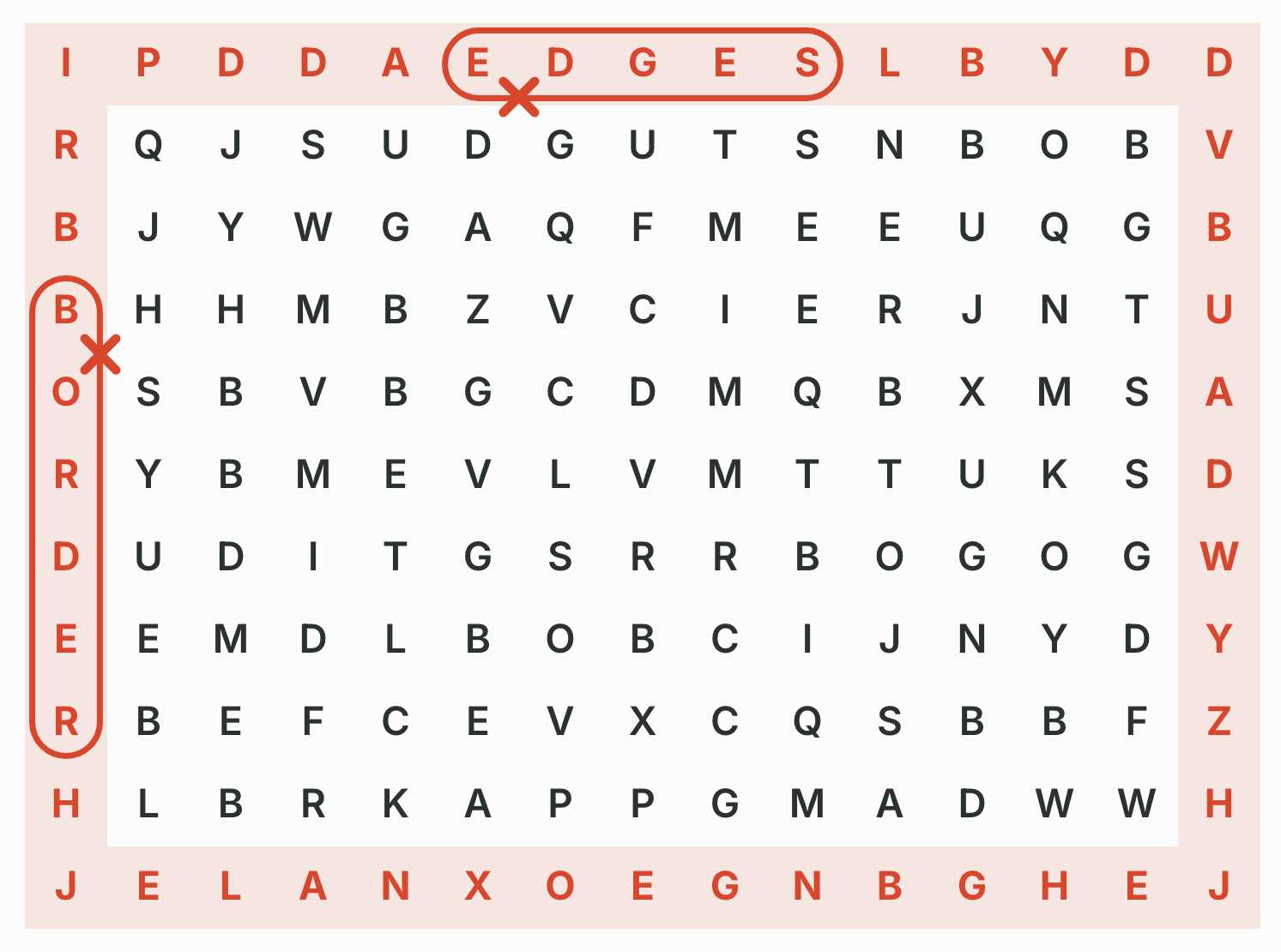
The perimeter is the easiest place to find a word. There's less surrounding noise for the eye to filter, so anything on the border jumps straight out. Pull your answers toward the interior. It gets harder to do, and more effective, as the grid shrinks.
3. Enlarge the grid
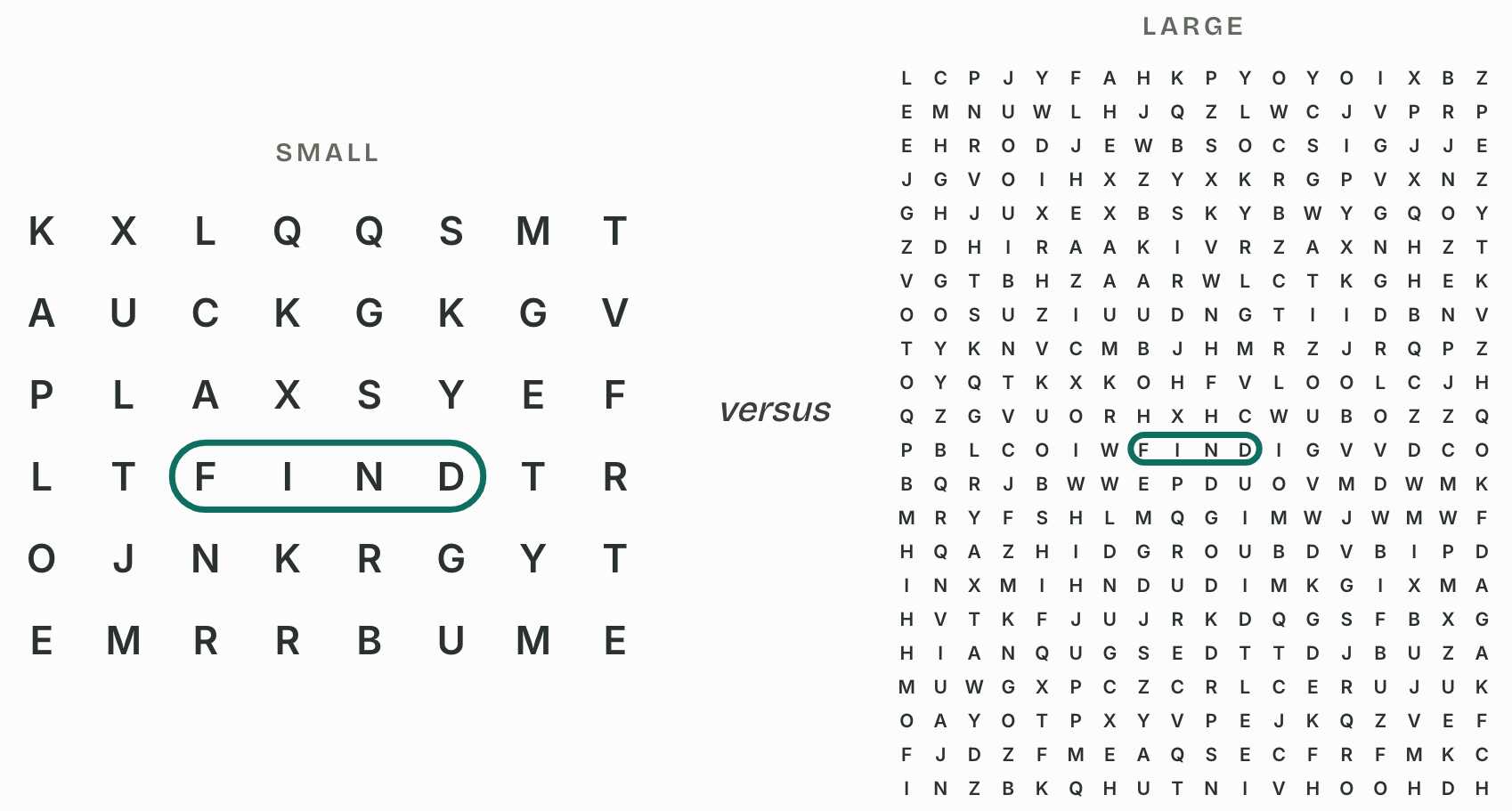
The simplest lever is size. A larger canvas means more filler, longer sightlines, and no easy edge to anchor on. A pocket-sized square gives the eye a foothold. 1,280 letter blocks on a 32×40 grid take it away.
4. Match filler to your words
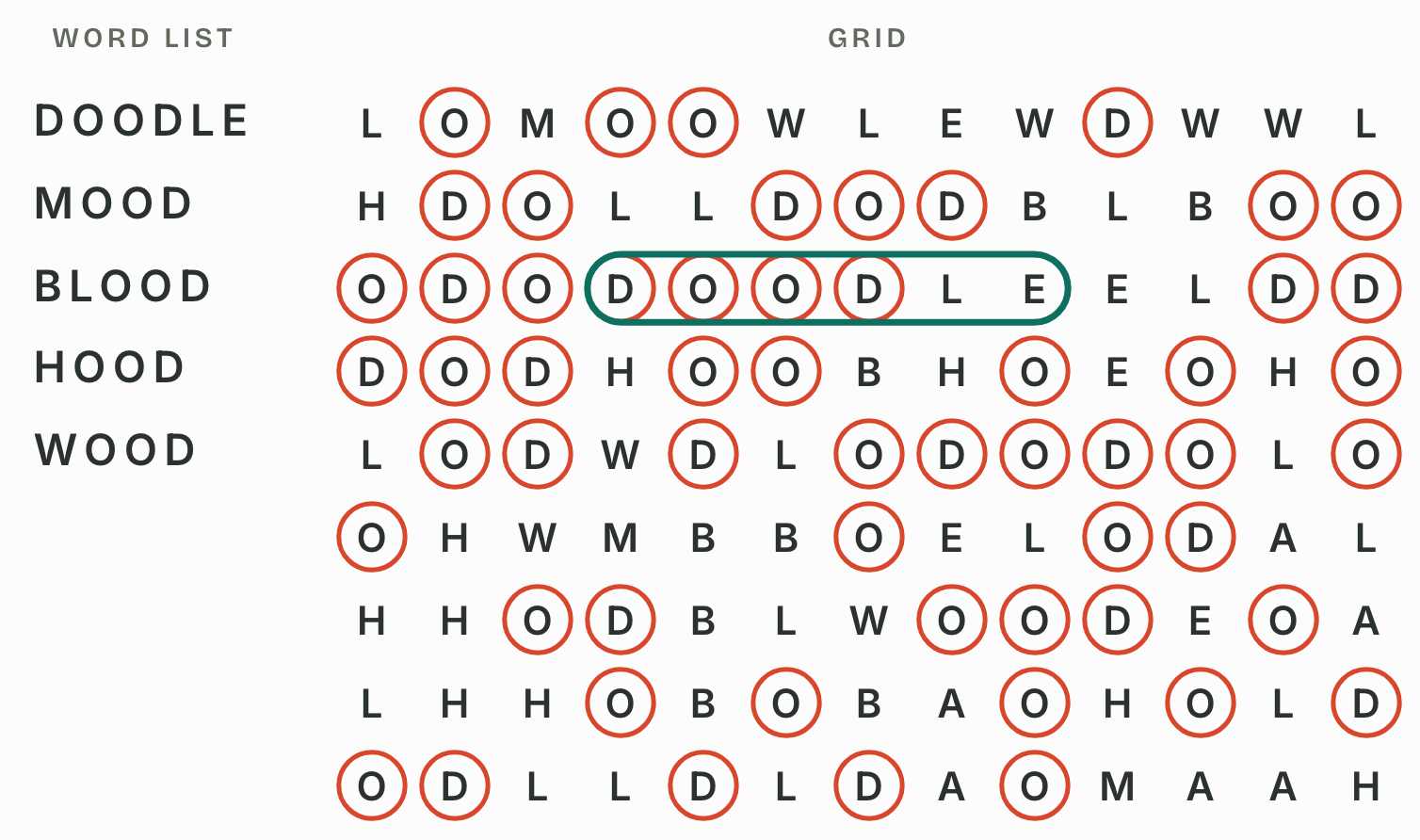
Fill the empty cells with random letters and you leave a tell: 'foreign' letters that appear in no answer, easy for the eye to skip. Instead, count the letters in your word list and add filler in the same proportions. A list heavy with O's and D's gets a grid heavy with O's and D's — so nothing stands out to ignore.
Your master-class collection
Ready to test yourself?
Each volume features distinct, hand-curated layouts. The following 3 books cover the entire difficulty range from Hard to Very Hard (the 'Endurance Path' philosophy) to Extremely Hard (the 'Visual Warfare' philosophy).


